About This Book
도서 소개
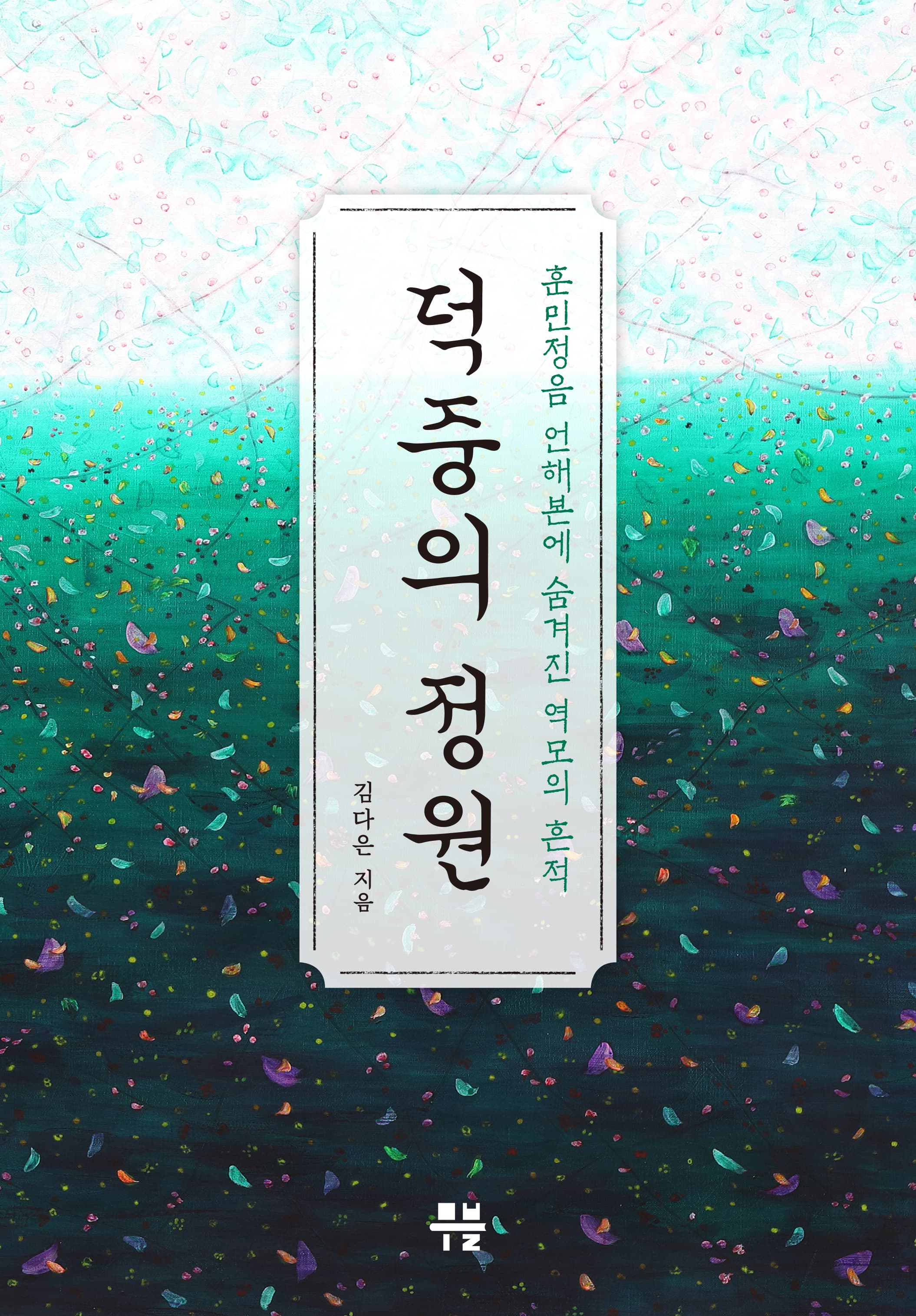
Deokjung’s Garden is a historical mystery dealing with Hunminjeongeum (“proper sounds to instruct the people”), which is the former name of Hangul, the Korean writing system. The novel, set against the backdrop of political instability during the rule of King Sejo in Joseon Dynasty, is centered around a love triangle among the king, a royal concubine, and a member of the royal family. Full of tension and mystery, the book also provides a valuable portrayal of old Korea and its culture.
Deokjung’s Garden unfolds around Sejo, who usurps the throne through conspiracy; Deokjung, a maidservant who becomes King Sejo’s royal concubine; and Gwiseonggun, the king’s nephew. The three become entangled in a love triangle. In addition, there is evidence of treachery found in the vernacular translation of Hunminjeongeum, the book, as well as the conspiracy between King Sejo and a Buddhist monk who form a secret society, and the story spirals into a dark and complex court intrigue. About half of this epistolary novel is composed of letters. Though readers in the English-speaking world may find this story about the Korean royal court unfamiliar, the novel’s storytelling power is expected to kindle their interest.
Table of Contents
목차
Table of Contents
Author’s Note 4
Prologue 8
Part 1. Awake after a Decade of Sleep 15
Part 2. When a Painting Is Not a Painting 97
Part 3. The Secret of the Pact 173
Part 4. There Was No Love Letter 241
Epilogue 327
The Family Tree of King Sejo 335
Preview
미리보기
Author’s Note: Are Books Destined for a Certain Fate?
Deokjung’s Garden was originally a five-hundred page novel that took me two years to prepare for and another year to write. I took special care to make it a book of correspondences, from the prologue to the epilogue; I had hoped that it would establish itself as a renowned espitolary novel. But the publisher went out of business, and the book was discontinued only a year after its publication, before I’d even received any royalties from the sales. I had put so much passion and effort into the book and had gotten nothing in return. It pained me so deeply that I couldn’t get up the courage to find another publisher to reissue the book.
Ten years passed. A reader I happened to meet told me that while searching for materials on the vernacular translation of Hunminjeongeum, she had come across the title, A Love Letter of Treason, on a website. According to the site, the novel was supposed to be a notable work dealing with the vernacular translation of Hunminjeongeum. So she demanded why the book couldn’t be purchased anywhere. At the time, the book could be found in major libraries, as it had been selected as a recommended book by the Ministry of Culture, Sports and Tourism; but there hadn’t been enough time for it to reach the public at large. The fervent and memorable protest by the reader led me to publish a revised edition after over a decade.
In A Love Letter of Treason, a novel based on historical records, a letter sent by a royal concubine named Pak to Gwiseonggun ends up costing the lives of many people. In Deokjung’s Garden, however, a letter sent by Gwiseonggun to the concubine comes to life after a decade, bringing about a whirlwind of political schemes. Rather than taking historical facts and fictionalizing them for this book, I made use of gaps in historical records. In particular, I tried to imagine what might happen when politics and romance come together in the garden of language that is Hunminjeongeum; could the two exist in harmony with each other? I also wrote it as a narrative novel to make it easier to read, except when I felt the epistolary format was absolutely necessary.
With those changes in form and content, the book became not just a revised edition but a completely different work. I pondered on the reason why the story underwent such a massive change, and concluded that it’s because my own thoughts regarding history has changed with time. So this book is not just a revived edition of a dead book, but the result of my growth as an author. It is customary to include the preface to the former edition in a revised edition, but the content of this novel has changed so dramatically that the earlier preface could misinform the reader; so I decided not to include it in the new edition. It is often the case that different authors write novels with the same historical background, but this novel is experimental in that one author has written two different novels with the same historical backdrop.
I’d also like to note that the text of Hunminjeongeum mentioned throughout the novel refers to the vernacular translation, not the Chinese or original text. The vernacular translation presumed to have been published at the time of King Sejong’s rule cannot be found today; in the novel, the text is referred to as the original copy of the vernacular translation of Hunminjeongeum, and the text with which the novel primarily deals is the oldest remaining copy of the vernacular translation, found in Volume One of Worinseokbo (Episodes from the Life of Sakyamuni Buddha), published during King Sejo’s rule.
It is my hope that readers will join me in keeping an eye on the fate of this book as it starts a new life after a decade of sleep.
Away from Seoul in Auraji, Jeongseon
July 30, 2023
Prologue
More than a decade had passed since Prince Suyang rose to the throne and left for the palace. The birdhouse he’d hung in a tree for his pet hawk when he was still a prince remained in its place, though empty; the lotus flowers continued to come into bloom, shooting up frightfully thick stalks; the golden carp in the pond, too fat now, had difficulty swimming. Nayeong did a closer inspection of the king’s private residence than usual, but detected no change in particular. Recalling the previous night’s dream, she headed to Deokjung’s Garden in the back. In the dream, three girls had sneaked into the garden and gotten into trouble. The three had spent their childhood here together, but had gone their separate ways when they grew older.
Staring at the loofah vines clinging to the wall, Nayeong thought about one of the girls who’d been in her dream: Deokjung, who’d loved to talk to trees, grass, and flowers, and other voiceless things. That was how she learned, it seemed, what kind of medical properties plants possessed. Deokjung gained favor in the eyes of the Lady Consort by showing her how the water from boiling loofah sponge could be used to smooth one’s skin. She was first given the task of planting loofah in the backyard of the main house; then she began to plant various vegetables there as well, soon harvesting an abundance of food. As the vegetables grown by Deokjung in her spare time became food for the family, the Lady Consort further encouraged her to cultivate the backyard garden. Deokjung prided herself on doing productive work in the main house, thanks to which she didn’t have to work in the kitchen, or do laundry and clean the house.
With time, Deokjung’s produce grew in greater abundance, and there was plenty of fruits and vegetables to serve the many guests who came to pay the prince a visit. The young king had ascended to the throne after the death of his father, King Munjong. Even Nayeong, who was only thirteen at the time, felt uneasy at the fact that the new king was only twelve years old; the adults must have felt even more so. Prince Suyang was accompanied at all times by two or three men who were burly and strong. He always gathered men around himself, perhaps to be of aid to the young king. Among these men was Han Myeonghoe, a man who had been born premature; he always sneezed loudly, after which he strode around swinging his arms, though his back was hunched. There was also a man named Kwon Ram, who was basically a good-for-nothing, and sounded like a chicken cooing when he spoke. Then there was Hong Dalson, a big, bulky man. All three of them were ministers of the nation now. Shin Sukju, a scholar of the Hall of Worthies, had begun to frequent the prince’s residence as well. Completely unaware of the storm that was about to sweep the world, the three girls, Deokjung, Bohee, and Nayeong, lived a life of contentment in the backyard of the main house of the Lady Consort.
One day, the Lady Consort gave Deokjung permission to use the piece of land between the main house and the secondary house. The land was not small; home to countless trees including fruit trees, it stretched out so far that you couldn’t see where it ended. Anything could thrive there. The Lady Consort informed Deokjung that Prince Suyang had granted her permision to plant all the fruits and vegetables she wanted to feed the family. She also gave her leave to put the men and women in the household to work if needed, so Deokjung gained further influence over the household. Everyone enjoyed seeing the plants she’d cultivated, and counted the days until they could taste the fruits and vegetables she’d grown. They called the place “Deokjung’s Garden.”
Prince Suyang hadn’t been attracted to Deokjung from the beginning.
One day, Prince Suyang brought home a Buddhist monk. The monk’s shaved head and piercing eyes caught people’s attention. He also had a long knife scar on his neck. The prince and the monk met through an unusual series of events. One autumn day, soon after King Munjong had been enthroned, the monk had been caught going about inside the city walls without a monk’s certificate. He was being dragged away like a major criminal, confined to a cangue. Seeing the monk, Prince Suyang asked the police bureau officers what crime he had committed, and the officers explained that he was being taken to his original domicile. The cangue had been placed around his neck in case he tried to run. The prince commanded the officers to remove the cangue from the man, as it was cruel and he had committed no serious crime. Thanks to the prince, the monk was freed from the cangue, but a long gash remained on his neck. People called him Deokjung, meaning “a monk favored of the king.” Nayeong didn’t know who had first called him by that name; she realized only now, after the previous night’s dream, that the name—though written with different Chinese characters—sounded the same as that of her friend who’d appeared in the dream. Three girls had been caught after sneaking into the garden, and Deokjung had struggled to get free. Her face had turned darker and darker until it could no longer be recognized. That was when Nayeong woke up, screaming.
Deokjung, the monk, often paid a visit to Prince Suyang. Once, the prince was caught in a somewhat embarrasing situation. He enjoyed hunting, and was coming home from a hunting trip with some pheasants and rabbits he’d caught when he ran into Deokjung the monk. The monk reminded him that one must not kill; nothing could be done about the animals that were already dead, but the ones that were still alive, though wounded, were released into Deokjung’s Garden. Deokjung, the girl, gave them a patch of land away from her vegetables. She made nets out of dry grass for the pheasants and other birds, and little fences for the rabbits and other four-legged animals. Increasing numbers of pheasants, rabbits, and birds made their way into her garden, which became a world of its own, full of trees and flowers growing in harmony, as well as livestock and wild birds.
So must have risen the rumor that Prince Suyang fell in love with Deokjung, the girl, while having her tend to his pheasants.
Changes came about in Deokjung’s Garden, as well as in other parts of the house, with Deokjung the monk appearing on the scene. He went in and out of the garden as he wished under permission of the prince. Deokjung, a quiet and reserved girl, spoke freely when she was with the monk. Having lived in a temple in the mountains, the monk must naturally have learned to find things to eat in nature, and how to love and care for them, which helped him see eye to eye with the girl. He also brought her wild plants that didn’t grow in her garden, such as columbine, aster, bleeding hearts, bellflowers, and purple perilla. He brought plants he wanted to cultivate in the garden, along with bugs hiding in the plants, which startled the girl. As she spent time with the monk, her personality began to change, turning her into a girl who could speak with everyone.
Nayeong recalled the day when the animals in Deokjung’s Garden had been sent elsewhere. Just as the destinies of the three girls changed when Prince Suyang became the king and the Lady Consort the queen, so did the destinies of the animals. Of the three girls, two accompanied the king and queen into the royal palace. Bohee became a royal consort to the queen, much like a secretary, and Deokjung became a royal concubine to the king. After they left, Deokjung’s Garden fell into neglect. But thanks to the fruit trees planted by Deokjung, the garden was overflowing with fruits now. There weren’t many people to eat them, however, so the fruits would fall to the ground, making the land even more fertile and the garden more abundant. It was so full of trees, vines, and grass that the path could no longer be seen. Being left behind in the private residence, Nayeong had been overwhelmed with sorrow. But after many years passed, she came to realize how much more peace and comfort she enjoyed outside the palace than her friends did inside; though there were the occasional rocks people threw into the private residence, even after more than a decade, intended for the king who had killed his young nephew for the throne.
Nayeong looked with concern at the empty pen where the animals had once been. She wondered what her dream meant. There was no reason for Deokjung to be reprimanded for playing in her own garden, not even in a dream. But Nayeong had a keen sense of premonition, which was partly the reason why she, despite being a woman, had been called to oversee things in the private residence. She didn’t notice anything amiss in the garden, though, so she turned around to leave, when she saw a man, Dol’s father, running toward her with a broom in hand. His behavior was quite out of the ordinary, and Nayeong knew immediately that something terrible had happened. She was told that the queen’s royal consort had rushed from the palace to the private residence and asked for her. Bohee was the queen’s consort as well as her secret secretary; her personally coming here foretold a major event.
Part 1: Awake after a Decade of Sleep
1.
Prince Imyeong and Gwiseonggun entered the palace together and asked for the king’s audience. People thought that they must have come so early in the morning to thank the king, as Gwiseonggun had recently passed the martial examination. Kim, the head eunuch, standing at the door, congratulated the father and son on passing the imperial examination. The two men, however, looked as white as a sheet, not happy in the least, as they went to see the king. The king would not normally grant an audience at this early hour, but he favored Gwiseonggun and liked to flaunt an exclusive brotherly affection for Prince Imyeong. He gave permission for both men to enter, welcoming them with the words, “I’ve been meaning to invite you for a visit, Gwiseonggun, so I’m glad you’ve come. You have excellent manners and are the most skilled man in the family in martial arts. I’ve heard that you passed the exam. This country and I both depend on you for our protection.”
Prince Imyeong bowed down in prostration before the king, which was unusual. Gwiseonggun followed suit, prostrating himself even lower. The king’s generous praise and trust in Gwiseonggun made Imyeong shudder with dread. Before the king could ask his son another question, Imyeong pulled out an envelope.
“What is that?” the king asked.
Stuttering, Imyeong replied, “A . . . a letter Gwiseonggun has received.”
The king glanced at Gwiseonggun, whose face was lowered.
“What sort of letter makes father and son pay a visit at this early hour?”
“A . . . love letter, I believe,” Gwiseonggun replied this time, though he hadn’t meant to speak up.
The king wasn’t sure at first if he had heard right; then he burst into laughter. The servants standing outside the door looked at each other, pleased that the king, who had been in low spirits because of a long-standing skin condition, seemed so happy at the presence of Gwiseonggun.
“You are quite old enough to receive a letter of the kind. It is only to be expected that such a noble and handsome young man as you should receive one. But how cruel your father is, to snatch the letter away from you and report it to the palace!”
Though the king had spoken in defense of Gwiseonggun, neither the son nor the father dared say another word. The king encouraged in an even louder voice, “Gwiseonggun has come of age. He may keep his letter to himself. There is no need for him to show it to his father, much less report it to his uncle.”
As the father and son remained in silence, it occured to the king that he may have embarrassed them. So he asked good-naturedly, “Since you’ve brought the letter here, I’ll ask who the sender is.”
Gwiseonggun made no reply, and Prince Imyeong said in a trembling voice, “Th-the sender is a woman . . . within the palace.”
Silence fell. The senior palace maid and the head eunuch, who had been listening outside by the door, were shocked by the answer but pretended they hadn’t heard. They realized that the early morning visit by Prince Imyeong and Gwiseonggun had indeed been extraordinary. Having learned that it was a woman within the palace who had sent a love letter to Gwiseonggun, the king made no immediate reply. The silence stretched on.
The king spoke again at last. “A woman within the palace? Who, exactly? Tell me the name.”
“Deok . . . Deokjung, Your Highness,” Imyeong replied.
The senior palace maid quickly tried to recall if there was a young court lady named Deokjung, but couldn’t. As she was about to breathe a sigh of relief, the king said, “Every other woman in the street is named Deokjung. The writer of the letter must be someone from outside the palace walls. You must have been confused.”
Then the king asked Gwiseonggun, “Were you handed the letter directly?”
“No, Your Highness. Some eunuchs brought the letter.”
“Letters for the royal family are to be delivered by maidservants. How is it that eunuchs brought you the letter?”
“I thought it strange myself, which is why I told Father; he agreed that it was quite strange, so we hastened to the palace.”
“What did the letter say?”
“I haven’t read it, nor will I ever be able to read it.”
“How, then, can you be so certain as to the nature of the letter?”
“I am at your mercy, Your Highness. If you take a look at the letter, you will see why it shocked me so, and why I dared not open it.”
The senior palace maid waiting outside silently ordered the servants to leave. The king, reading the letter in question, was quiet for some time; then he fell into a coughing fit. The senior maid had to be aware of the king’s every move, and the sound of his breathing was enough to inform her of his condition. He seemed in great shock. It was as if time had come to a standstill; no one dared move. Neither those within the royal audience chamber nor those without could hardly breathe.
“Prince Imyeong may return home. Gwiseonggun must stay,” the king commanded.
In haste, the head eunuch ordered even the senior palace maid to withdraw, and stood afar from the chamber, pretending he had heard nothing. He bowed to Prince Imyeong as though nothing had taken place. Walking with heavy footsteps, the prince looked like a lamb led to the slaughter. He was the king’s younger brother, the only brother the king loved. Up until this disaster, Prince Imyeong and Gwiseonggun had been the only men in the family the king trusted. But now he had sent the prince home, and commanded his son to stay behind by himself. The head eunuch graciously saw the prince off, but the prince walked down the stone steps without saying a word to him or looking back at the chamber where his son was. In the meantime, the senior palace maid, who had been waiting at a distance at the back of the chamber, heard the king shout, “Incarcerate the eunuchs Choi Ho and Kim Jungho!”
The king had been so pleased moments before; now his voice was thundering with rage. It occured to the senior palace maid at that moment that there was a royal concubine named Deokjung. Realizing the full import of the matter, she began to shake all over.
.......
![추락하는 것은 날개가 있다 [전자책]](/_next/image?url=%2Fuploads%2F1777131952340-ib3o18.jpg&w=3840&q=75)
![미로의 날들 [전자책]](/_next/image?url=%2Fuploads%2F1777131714777-hq56ky.jpg&w=3840&q=75)